

Most small business owners encounter M&A once, maybe twice in their entire business life. The other side of the table has often done it dozens of times. That gap in experience is where deals go wrong, and where legal preparation makes the biggest difference. This guide covers what you need to know before the process starts.
How M&A Is Different for Small Businesses
Large corporates have in-house legal teams, M&A advisers on retainer, and finance departments that live inside these processes. Small business owners are usually running the business at the same time as trying to buy or sell one. The deal competes with everything else for attention, and that is when important legal details get missed.
The stakes are also more concentrated. For a large corporation, one acquisition is one line in a portfolio. For a small business owner, it is often the most significant financial transaction of their life. Getting the legal side wrong does not just affect the deal. It can affect everything that follows.
Important Legal Decisions in Every M&A Deal
Share Sale or Asset Sale
This is the first legal decision and one of the most consequential. In a share sale, the buyer purchases the shares of the company and takes on everything that comes with it: assets, contracts, employees, liabilities, and any legal history the business carries. In an asset sale, the buyer selects specific assets to purchase and leaves the rest, including most liabilities, with the seller.
For small business owners, the distinction matters enormously. As a seller, a share sale is often cleaner and more tax-efficient. As a buyer, an asset sale gives you more control over what you are actually taking on. Neither is automatically better. The right structure depends on the specific deal, and getting this decision wrong early creates problems that are difficult to unwind later.
Deal Structure
The structure of the deal determines your legal exposure long after completion. A buyer in a share purchase inherits the target company’s full legal history, including liabilities that were never disclosed. A seller who agrees to extensive warranties without understanding what they cover can face claims years after the deal closes.
Small businesses rarely have the warranty insurance options available to larger corporates. That makes the drafting of warranties and indemnities in the transaction documents more critical, not less. What you agree to in those documents is what you are bound by.
M&A Risks for Small Business Owners
Starting Unprepared
Most legal problems in SME M&A transactions do not start during the deal. They start before it, in the years of running a business without thinking about how it will eventually be bought or sold. Contracts signed without proper legal review, IP created by freelancers without assignment agreements, employment terms that were never formally documented. None of these feel urgent while the business is growing. All of them become urgent the moment a buyer starts asking questions.
Warranties You Never Fully Read
Warranties are statements you make to the buyer about the state of the business. If any of them turn out to be inaccurate, the buyer has a legal claim against you. Small business owners often sign warranty schedules without fully understanding the scope of what they are confirming, or without checking whether every statement is actually true.
A warranty that says all contracts are in full force and effect sounds reasonable. It becomes a problem if one of your key supplier agreements has a clause neither party remembers. The disclosure process exists to surface these issues before signing. Skipping it properly is one of the most common and costly mistakes in SME deals.
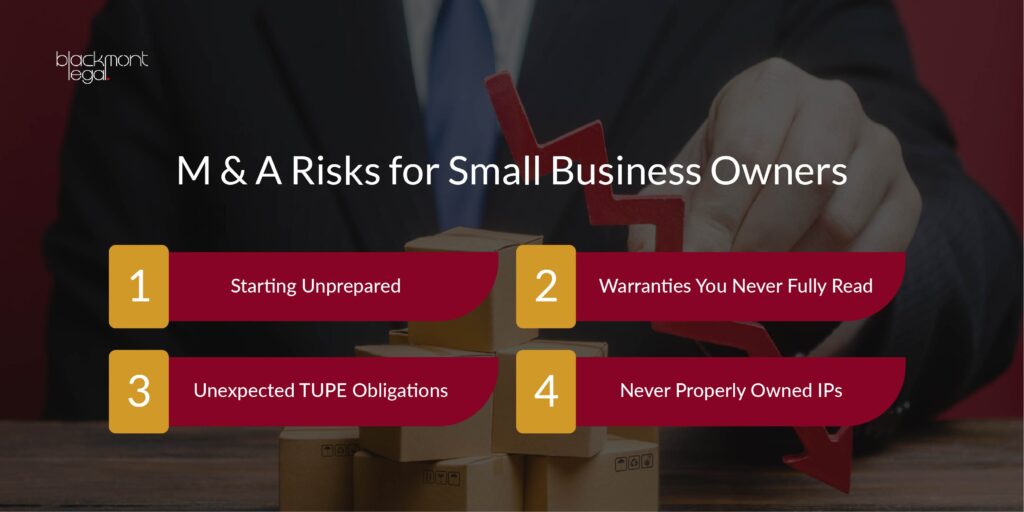
Unexpected TUPE Obligations
TUPE means that employees transfer to the buyer on their existing terms and conditions. It is not optional, and it applies regardless of what the buyer intends to do with the workforce after completion. Small business owners on both sides of a deal regularly underestimate what this involves.
As a seller, you are required to inform and consult affected employees before completion. As a buyer, you inherit employment contracts, continuity of service, and any outstanding HR issues the business was carrying. Pension liabilities and tribunal claims transfer too. These are not details to sort out after signing.
Never Properly Owned IPs
If a freelancer built your website, wrote your software, or designed your branding, the IP may not belong to your business unless there was a written assignment in place. Many small business owners discover this during due diligence, when a buyer’s solicitor asks for evidence of IP ownership and the paperwork does not exist.
This is fixable before a deal starts. It is significantly harder to fix once a buyer has flagged it as a risk, because by that point it becomes a negotiating point that affects price.
What to Fix Before the M&A Deal?
Contracts Clean Up
Review your key commercial contracts before any deal process begins. Look for change of control clauses that give counterparties the right to terminate if ownership changes. Check that supplier and customer agreements are properly documented and signed. Make sure nothing critical depends on a verbal arrangement or an email chain that was never formalised.
Ownership
Audit your IP. Confirm that trademarks are registered in the right entity. Get written assignments in place for any IP created by third parties. Check software licences to understand whether they transfer on a change of ownership. A buyer will ask all of these questions. Having clean answers ready protects your position and keeps the deal moving.
Legal Advice
The cost of legal advice at the start of an M&A process is a fraction of the cost of fixing problems that surface halfway through one. A solicitor who understands SME transactions can identify the issues specific to your business before a buyer does, help you structure the deal in a way that protects your position, and make sure you understand what you are agreeing to before you sign it.
How Blackmont Legal Helps
At Blackmont Legal, we work with small business owners on both sides of M&A transactions. We help buyers understand what they are acquiring before they commit, and we help sellers get their businesses legally ready before a deal process begins.
We conduct legal due diligence, draft and negotiate transaction documents, advise on deal structure, and manage the employment and IP issues that catch SME owners out. We also offer ongoing legal support through our Legal as a Service model, which means you can have a solicitor who already knows your business when a deal opportunity arrives.
Frequently Asked Questions
Do small businesses actually need a solicitor for an M&A deal?
Yes. SME transactions carry the same legal risks as larger deals, often with less protection in place. A solicitor identifies problems before they become liabilities and makes sure the documents reflect what was actually agreed.
What is the difference between a share sale and an asset sale for a small business?
In a share sale, the buyer takes on the entire company including its liabilities. In an asset sale, the buyer selects specific assets and leaves most liabilities with the seller. The right structure depends on your specific deal and tax position.
What does TUPE mean for a small business buying or selling?
Employees transfer to the new owner on their existing terms. As a seller you must inform and consult staff before completion. As a buyer you inherit their contracts, continuity of service, and any existing HR issues.
What warranties do small business owners typically have to give?
Statements covering the financial position of the business, its contracts, employment obligations, IP ownership, regulatory compliance, and litigation history. Each one carries legal liability if it turns out to be inaccurate.
When should a small business owner start preparing for an M&A deal?
Before anyone approaches you. Getting contracts documented, IP properly owned, and employment terms formalised takes time. Starting that process after a buyer is already asking questions puts you at a disadvantage.