

Deals fall apart after signing. Assets turn out to be worth less than the price paid. Liabilities surface that nobody mentioned. Regulatory approvals that were assumed become problems that derail the entire transaction.
Most of these outcomes are not bad luck. They are the consequence of inadequate due diligence.
In any merger or acquisition, due diligence is the process by which both parties verify what is actually being bought and sold. It is the difference between making an informed commercial decision and writing a very expensive cheque based on assumptions. This guide sets out why it matters, who it matters to, and how to do it properly.
Why Does Due Diligence Matters?
For Buyers
A buyer’s primary exposure in any acquisition is paying for something that is not what it appears to be. Due diligence is the mechanism for closing that gap. It surfaces undisclosed liabilities, identifies contractual obligations that transfer with the business, and reveals whether the financial performance being presented is real and sustainable.
Under English law, the principle of caveat emptor applies in commercial transactions. The buyer bears responsibility for satisfying themselves about what they are acquiring. A seller is not obliged to volunteer unflattering information that a buyer failed to ask about. If a buyer skips due diligence or conducts it superficially, they own the consequences. Courts will not rescue a sophisticated commercial party from a bad deal on the basis that they did not look carefully enough.
For Sellers
Due diligence is equally important for the party selling. A well-prepared seller who has identified and addressed issues in advance controls the process. They can respond to buyer queries quickly, limit the scope for price renegotiation, and reduce the risk of the deal collapsing at a late stage when disruption to the business is at its highest.
Sellers who enter a process unprepared hand leverage to buyers. Every issue a buyer discovers that the seller did not disclose proactively becomes a point of negotiation, and usually not in the seller’s favour. Preparation is not just good practice. It is a commercial strategy.
How to Conduct Due Diligence
Legal Due Diligence
This covers the legal structure of the target business, its contracts, its regulatory position, and any existing or threatened litigation. Key areas include corporate records and share ownership, material commercial contracts and any change of control provisions within them, employment agreements and workforce obligations, intellectual property ownership and any third-party licensing arrangements, and pending disputes or regulatory investigations. A change of control clause in a major customer contract, for example, could entitle that customer to terminate the agreement on completion of the acquisition. If that customer represents a significant portion of revenue, it fundamentally affects the value of what is being acquired.
Financial Due Diligence
Financial due diligence examines whether the numbers stack up. This means reviewing audited accounts, management accounts, cash flow, working capital, debt positions, and the quality of earnings. The question is not just whether the business is profitable today but whether that profitability is real, repeatable, and sustainable. Revenue that is heavily concentrated in a small number of clients, or earnings that depend on one-off items, looks very different on closer inspection than the headline figures suggest.
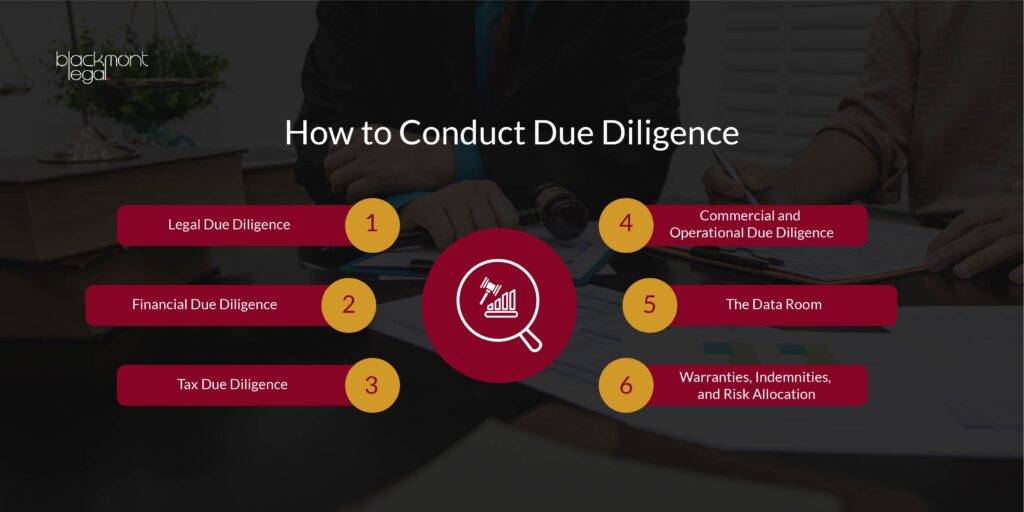
Tax Due Diligence
Tax liabilities in an acquisition can be significant and are frequently underestimated. Tax due diligence examines the target’s historic tax compliance, identifies any open enquiries or disputes with HMRC, and assesses the tax structure of the transaction itself. In a share purchase, the buyer acquires the company including its historic tax position. Liabilities that existed before the acquisition become the buyer’s problem after it. Specific warranties and indemnities in the sale and purchase agreement are the mechanism for allocating that risk, but they need to be negotiated on the basis of accurate information.
Commercial and Operational Due Diligence
Commercial due diligence looks beyond the legal and financial position to assess whether the business is actually what it presents itself to be. This includes market position, customer relationships, competitive dynamics, and the sustainability of the business model. Operational due diligence examines systems, processes, key personnel dependencies, and the practicalities of integration. A business that is entirely dependent on one individual, or whose systems are incompatible with the acquirer’s, presents a very different risk profile than one that is structurally robust.
The Data Room
In practice, due diligence is conducted through a structured data room, a secure repository of documents provided by the seller for the buyer’s review. The quality of a seller’s data room is itself a signal. A well-organised, comprehensive data room demonstrates that the business is well-run and that the seller is serious about completing. A disorganised or incomplete data room raises questions and extends the process.
The buyer’s advisers review the data room and produce a due diligence report identifying issues, risks, and areas requiring further information. This report informs the negotiation of the sale and purchase agreement, including the warranties the seller is required to give and any specific indemnities for identified risks.
Warranties, Indemnities, and Risk Allocation
Due diligence does not eliminate risk. It identifies and allocates it. The sale and purchase agreement will contain warranties from the seller about the state of the business. If those warranties are breached after completion because something was misrepresented or undisclosed, the buyer has a legal remedy. Specific indemnities provide direct protection against identified issues discovered during due diligence. The negotiation of these provisions is where the due diligence findings directly translate into contractual protection, or the absence of it.
Blackmont Legal for M&A Due Diligence
Due diligence done properly protects buyers from overpaying and sellers from deals that collapse or unravel after completion. Done poorly, or not at all, it is where transactions go wrong and where legal disputes begin.
At Blackmont Legal, we advise buyers and sellers through every stage of the due diligence process. We identify the issues that matter, advise on how they affect the transaction, and make sure the deal documentation reflects the actual risk position rather than an optimistic version of it.
Whether you are acquiring a competitor, preparing your business for sale, or somewhere in the middle of a transaction that has become complicated, we provide the legal clarity you need to move forward with confidence.