The Medicines and Medical Devices Act 2021 (MMDA 2021) introduced major changes to how medicines and medical devices are regulated in the UK, with direct and immediate implications for businesses involved in manufacturing, distribution, import, export, or supply. This article sets out the key elements of the Act and what UK businesses need to understand to stay compliant and keep regulatory risk under control.
The Medicines and Medical Devices Act 2021 Explained
The Act created the role of Commissioner for Patient Safety, tasked with strengthening patient protection and public confidence in medicines and medical devices. It also gives regulators expanded authority to amend and update existing rules governing human medicines, veterinary medicines, and in particular medical devices. This framework is designed to give the UK greater regulatory flexibility and modernisation, especially in the post Brexit landscape.
The Act extends regulatory oversight across the entire lifecycle of medical devices, covering manufacture, registration, market placement, safety monitoring, information sharing, and enforcement.
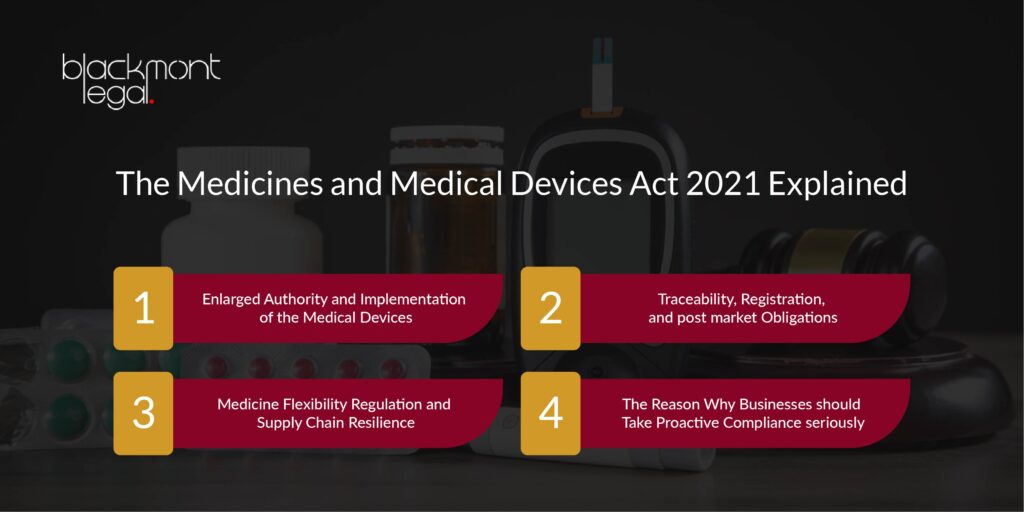
Enlarged Authority and Implementation of the Medical Devices
One of the most notable changes is the introduction of a reformed enforcement regime. Regulators are now able to apply civil sanctions, such as financial penalties or enforcement undertakings, either instead of or alongside criminal prosecution. This significantly increases regulatory reach and accountability for non-compliance.
For businesses involved with medical devices, including manufacturers, importers, and distributors, this results in wider and more demanding compliance obligations. The Act clearly sets out which breaches may lead to criminal prosecution or civil penalties and confirms that company directors and senior managers can face personal criminal liability where breaches occur with their consent, connivance, or as a result of neglect.
The Act also retains a due diligence defence. Businesses that can demonstrate they took all reasonable steps and exercised proper care may avoid criminal liability. In practice, this puts real weight on having strong compliance systems, internal audits, and clear, well maintained documentation.
Traceability, Registration, and post market Obligations
The Act gives regulators the power to establish and maintain medical device information systems, including registries for devices, manufacturers, and suppliers. It also strengthens the framework for registration, tracking, and reporting obligations for businesses operating in this sector.
Expected outcomes include improved traceability through unique device identifiers, stronger post market surveillance, mandatory reporting of safety incidents, and tighter market controls. These measures are designed to enhance patient safety and reinforce consumer protection.
For businesses, compliance does not stop at sale or distribution. Companies must ensure devices are properly registered, records are accurate and complete, reporting obligations are met, safety and performance standards are maintained, and they are ready to cooperate with investigations or recalls if required.
Medicine Flexibility Regulation and Supply Chain Resilience
Beyond medical devices, the Act also affects human and veterinary medicines. It allows regulators to amend existing medicines regulations, including introducing more flexible supply arrangements, enabling automation, and creating new prescription or supply pathways. The aim is to strengthen supply chain resilience and ensure continued access to medicines, particularly during periods of disruption or emergency.
For businesses involved in manufacturing, distributing, or importing medicines, this means regulatory requirements may evolve. Ongoing monitoring and proactive compliance are essential.
The Reason Why Businesses should Take Proactive Compliance seriously
The MMDA 2021 represents a clear shift in regulatory approach. The fragmented framework inherited from EU based legislation has been replaced with a more integrated, risk focused, and UK centric system.
Failure to adapt to this framework, whether through lack of registration, incomplete documentation, missed reporting obligations, or weak internal controls, can lead to civil fines, criminal exposure, product suspension, and lasting reputational harm.
At the same time, compliance brings commercial advantages. A clear legal footing, smoother market access, stronger trust, and confidence during regulatory inspections all flow from getting compliance right. For manufacturers and suppliers, embedding robust compliance, patient safety, and documentation standards is not optional. It is a legal and commercial necessity.
Conclusion
The Medicines and Medical Devices Act 2021 marks a significant overhaul of how medicines and medical devices are regulated in the UK. Businesses involved in manufacturing, supplying, importing, or distributing these products now operate under heightened scrutiny and increased responsibility.
To remain compliant, companies should actively review and update their internal processes. This includes confirming device registration, maintaining full traceability, implementing incident reporting systems, staying alert to regulatory changes, and embedding strong compliance and due diligence policies. Done properly, this approach reduces legal risk while reinforcing patient safety and regulatory confidence.