The distribution of drugs and tobacco products in the UK is tightly regulated. Businesses operating in these sectors face strict legal obligations designed to protect public health, prevent unlawful trading, and ensure product safety. Non-compliance does not end with warnings. It can lead to criminal charges, licence revocation, heavy financial penalties, and lasting reputational damage. This article sets out the principal legal risks facing businesses involved in drug and tobacco distribution in the UK.
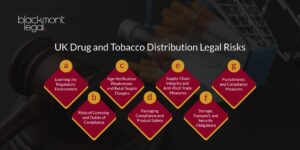
Learning the Regulatory Environment
The distribution of drugs and tobacco is governed by a complex mix of health legislation, consumer safety rules, and trading standards enforcement. Drug distribution is controlled through licensing requirements, tightly regulated storage conditions, and strict record-keeping obligations. Tobacco distribution is subject to extensive regulation covering packaging, advertising, age verification, and product movement.
It is critical for businesses to understand that regulatory requirements differ depending on whether the business handles prescription medicines, over-the-counter medicines, nicotine products, vaping products, or traditional tobacco. Each category carries its own compliance obligations. Misunderstanding which rules apply is not a technical mistake. It is a fast route to regulatory action.
Risks of Licensing and Duties of Compliance
In drug distribution, the most serious risk is operating without the correct licences. Distributors must hold appropriate authorisations to deal in, store, transport, and supply medicines at wholesale level. Any activity carried out outside the scope of an existing licence exposes the business to immediate regulatory enforcement.
There are also licensing requirements for tobacco distributors, particularly where distribution is large-scale, cross-border, or involves storage. Businesses must comply with the UK track-and-trace system, under which all legitimate tobacco products must carry a unique identifier allowing authorities to track them throughout the supply chain.
Incomplete, inaccurate, or missing records are treated as regulatory non-compliance. Regulators often view poor documentation as a warning sign of broader compliance failures.
Age-Verification Weaknesses and Retail Supply Dangers
One of the most common areas of legal exposure for tobacco and nicotine distributors is age-restricted sales. Any business supplying retailers must ensure those retailers understand and comply with age-verification requirements. Supplying large volumes to retailers with known compliance weaknesses may be treated as negligent conduct by the distributor itself.
For vaping products and nicotine pouches, age-verification duties apply in full. These products cannot be sold to under-18s, regardless of how they are marketed. Distributors must ensure that products meet UK standards and are supplied only to legitimate and compliant commercial operators.
Packaging Compliance and Product Safety
Strict packaging and labelling rules apply to both drug and tobacco products. For medicines, this includes accurate dosage information, safety warnings, batch numbers, and compliance with approved product specifications.
Tobacco products must comply with UK plain-packaging requirements, which restrict branding and require prominent health warnings. Even minor packaging errors can result in seizure of goods and enforcement action.
For vaping products, packaging must clearly state nicotine levels, include required warnings, and comply with size and ingredient limits. Distributors must prevent non-compliant or unlawful imports from entering the supply chain.
Supply-Chain Integrity and Anti-Illicit Trade Measures
Involvement in illicit trade, whether intentional or accidental, represents one of the most serious legal risks for tobacco distributors. Products sourced from unverified suppliers or sold through unregulated channels can lead to allegations of facilitating illegal distribution.
The same risk applies to drug distribution, where counterfeit or unlicensed medicines enter the supply chain. Regulators expect distributors to carry out supplier due diligence, verify product origins, and report suspicious activity without delay.
Failure to conduct proper checks can result in investigations, product confiscation, and criminal liability where authorities conclude that warning signs were ignored.
Storage, Transport, and Security Obligations
Drug distributors must store and transport medicines under controlled conditions. Temperature, humidity, and contamination risks must be actively managed. Poor handling or transport does not go unnoticed and can trigger enforcement action.
Tobacco products must also be stored securely to prevent theft, diversion, or supply to unregistered traders. Weak security measures may expose a business to enforcement action and negligence claims.
Punishments and Compliance Measures
Regulatory breaches can result in civil fines, criminal prosecution, licence suspension or revocation, seizure of goods, and public enforcement notices. Regulators also hold extensive investigative powers, including inspections and audits.
For many businesses, reputational damage is as harmful as financial penalties. Regulatory breaches can undermine access to supply contracts, insurance coverage, and ongoing regulatory approval.
Conclusion
The legal risks associated with drug and tobacco distribution in the UK are significant but manageable. Strong compliance procedures, accurate documentation, robust supply-chain controls, and regulatory awareness reduce exposure. Effective compliance is not administrative overhead. It is a commercial safeguard that protects operational continuity and long-term reputation.