
Most business owners entering an M&A transaction underestimate what a solicitor actually does. They assume it is mostly paperwork, something that happens at the end once the commercial terms are agreed. That assumption is expensive. The legal work in a deal is not a formality that follows the negotiation. It shapes the negotiation, protects the outcome, and determines what you are left with after the deal closes.
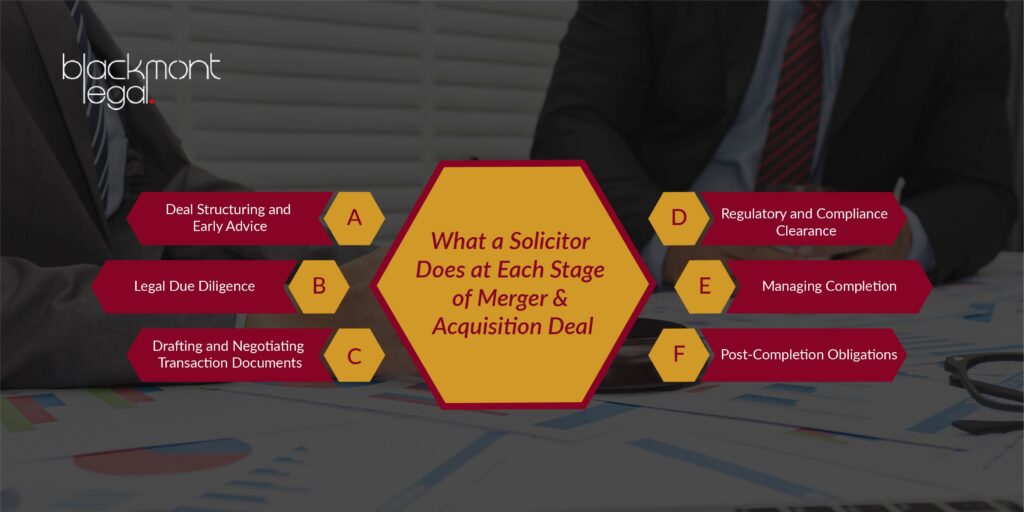
What a Solicitor Does at Each Stage of Merger & Acquisition Deal
Deal Structuring and Early Advice
Before a single document is drafted, a solicitor’s first job is to make sure the deal is structured correctly. Share sale or asset sale. Staged payments or full consideration at completion. Earn-out or clean exit. These decisions carry significant legal and tax consequences that cannot be undone once heads of terms are signed.
A solicitor advises on which structure best protects the client’s position, identifies the regulatory implications of each approach, and flags issues that need to be resolved before the deal progresses. Getting structure wrong at the start is one of the most common and most costly mistakes in M&A. It is also one of the easiest to avoid.
Legal Due Diligence
Due diligence is where a solicitor earns their place in a transaction. The financial advisers look at the numbers. The solicitor looks at everything the numbers do not show.
Legal due diligence covers the target company’s contracts, IP ownership, employment obligations, litigation history, regulatory standing, data protection compliance, and any third-party consents required to transfer the business. A supplier contract that terminates on change of ownership. A trademark registered in the wrong entity. An ongoing employment tribunal the seller did not volunteer. These are the issues that surface in due diligence when it is done properly, and in disputes when it is not. The report produced at the end of legal due diligence informs the warranties, the indemnities, and the price.
Drafting and Negotiating Transaction Documents
The transaction documents are where the deal is actually recorded. The share purchase agreement or asset purchase agreement, the disclosure letter, the tax deed, the board minutes, the stock transfer forms, the restrictive covenant agreements. Each one matters. Each one carries risk if it is poorly drafted.
A solicitor drafts these documents to reflect what was agreed and to protect the client if the other side later disputes what was meant. Warranties need to be scoped to cover the real risks of the transaction. Indemnities need to be specific enough to hold. Liability caps, limitation periods, and de minimis thresholds are all negotiated positions that determine the extent of each party’s exposure after completion. The negotiation of these documents is not administrative. It is where the legal protection is built or lost.
Regulatory and Compliance Clearance
Some transactions require regulatory approval before they can be completed. A solicitor identifies this early, before it becomes a problem that delays or derails the deal.
In the UK, transactions meeting certain turnover or market share thresholds may trigger a mandatory review by the Competition and Markets Authority under the Enterprise Act 2002. Regulated sector acquisitions, including those involving financial services firms, legal practices, or healthcare businesses, require approval from the relevant regulator before ownership can transfer. A solicitor maps these requirements at the outset, builds the timeline into the deal structure, and manages the application process where required. Regulatory clearance that is not planned for is one of the most disruptive surprises a deal can encounter.
Managing Completion
Completion is the most operationally intensive part of any M&A transaction. A solicitor manages the process from start to finish, coordinating the exchange of documents, confirming that all conditions precedent have been satisfied, and ensuring that consideration transfers correctly and that the shares or assets legally change hands.
In simultaneous exchange and completion transactions, everything happens on the same day. The sequencing matters. Documents must be delivered in the right order. Board resolutions must be passed. Stock transfer forms must be executed. If anything is missed, the deal does not complete cleanly and the parties may find themselves in a disputed position. A solicitor runs this process so the client does not have to.
Post-Completion Obligations
The solicitor’s role does not end on completion day. Post-completion obligations include filing stock transfer forms with HMRC and paying stamp duty on share transfers, updating the company’s register of members and register of persons with significant control, filing relevant changes at Companies House, and notifying key counterparties of the change in ownership.
Where earn-out mechanisms or deferred consideration are part of the deal structure, a solicitor monitors the obligations and advises on any disputes that arise over performance calculations. Warranty claims can surface months or years after completion. Having a solicitor who knows the transaction and the documents is the fastest route to managing those claims effectively.
When to Bring a Solicitor Into an M&A Deal
The answer is earlier than most buyers and sellers think. Ideally, before heads of terms are signed.
Heads of terms set the commercial framework for the transaction. They are described as non-binding, but the positions taken in them tend to stick. A buyer who agrees to a clean warranty package at heads of terms stage will find it much harder to negotiate meaningful protections later. A seller who agrees to an extended earn-out period without understanding the legal implications is committing to obligations they may not have intended.
A solicitor involved from the start can shape the heads of terms to reflect a position that is defensible throughout the deal, rather than spending the rest of the transaction trying to recover ground that was conceded before the legal work began.
Risks of Going Into an M&A Deal Without Legal Representation
The risks are not theoretical. They show up in disputes, in warranty claims, in regulatory penalties, and in deals that complete on terms the buyer or seller did not fully understand.
A buyer without legal representation may inherit liabilities they had no knowledge of, sign warranties that do not protect them, or complete a deal without satisfying conditions that make the transaction challenging. A seller without legal advice may give warranties they cannot stand behind, fail to make proper disclosures that expose them to post-completion claims, or agree to restrictive covenants that are broader than they realised and unenforceable in the terms they intended.
The cost of legal advice in an M&A transaction is a fraction of the cost of a post-completion dispute. Businesses that enter these transactions without proper representation are not saving money. They are deferring the cost to a point where fixing the problem is significantly more expensive.
Blackmont Legal for M&A Deal
At Blackmont Legal, we advise buyers and sellers across the full M&A lifecycle. We get involved before heads of terms are agreed, conduct legal due diligence that identifies the risks that matter, draft and negotiate transaction documents that protect our clients’ positions, and manage completion so nothing is missed.
We work with SMEs, founders, and growing businesses across multiple sectors, including technology, media, distribution, and professional services. Our LaaS model means clients who want ongoing legal support can have a solicitor who already knows their business when a deal opportunity arrives.
Call 0333 305 9957 or email [email protected].
Frequently Asked Questions
When should I involve a solicitor in an M&A transaction?
Before heads of terms are signed. The positions agreed at that stage shape the entire deal. A solicitor involved early can protect your position from the outset rather than trying to recover ground that was already conceded.
Do I need a solicitor if the other side already has one?
Yes. The other side’s solicitor acts in their client’s interests, not yours. Independent legal representation ensures your position is protected throughout the transaction.
What is legal due diligence in M&A?
A thorough review of the target company’s legal position, covering contracts, IP, employment, regulatory compliance, litigation history, and any third-party consents required to transfer the business.
What happens after an M&A deal completes?
Post-completion obligations include paying stamp duty on share transfers, updating the company’s statutory registers, filing changes at Companies House, and managing any earn-out or deferred consideration mechanisms. Warranty claims can also arise after completion and need to be managed by a solicitor familiar with the transaction documents.