
Not every business for sale is debt-free. Many carry commercial loans, trade creditor balances, HMRC liabilities, or employee obligations that transfer to the buyer depending on how the deal is structured. That does not automatically make them bad acquisitions. Some of the best deals involve distressed or leveraged businesses where the buyer acquires real value at a reduced price. But the risk is significant if you do not understand what you are inheriting, what stays with the seller, and where the legal protections need to sit.
The Risk of Buying a Business with Existing Debt
The core risk is straightforward: you pay for a business and then discover it owes more than you knew about. The debts reduce the value of what you bought, and depending on the structure of the deal, you may have no route to recover the difference from the seller.
That risk is manageable with the right deal structure, proper due diligence, and well-drafted transaction documents. It becomes unmanageable when buyers skip any of those steps because the deal feels urgent, the price looks attractive, or the seller assures them everything is in order.
What Debt Transfers in a Share Sale
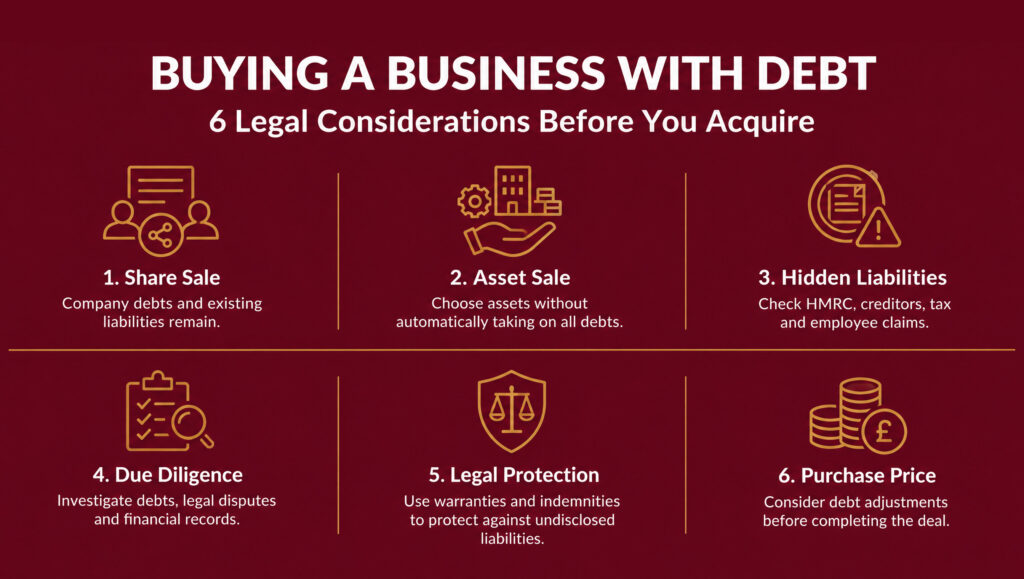
In a share sale, you buy the company. The company’s debts come with it. Outstanding loans, overdraft facilities, trade creditor balances, HMRC liabilities, ongoing litigation, and any other obligations the company holds all remain in place. You are not personally liable for them, but the company you now own is.
This is the fundamental commercial reality of a share purchase. The company’s balance sheet is your balance sheet from completion day. If the company owes more than the due diligence revealed, the loss sits with you unless the transaction documents give you a route to claim against the seller through warranties and indemnities.
Lenders with security over the company’s assets retain their position. If the company has granted charges over its assets to a bank or other creditor, those charges survive the share transfer. The buyer needs to understand the full security picture before committing.
What Debt Transfers in an Asset Sale
In an asset sale, you choose which assets to buy. The debts remain with the selling company unless you expressly agree to take them on. That is the structural advantage for buyers who want to avoid inheriting existing liabilities.
There are exceptions. HMRC can pursue buyers for unpaid VAT in certain circumstances, particularly where the business is transferred as a going concern under the Transfer of a Going Concern rules. Employee liabilities transfer under TUPE regardless of the deal structure. And if a buyer pays less than market value for the assets of an insolvent company, a liquidator can later challenge the transaction and seek to recover the shortfall from the buyer. Asset sales are cleaner than share sales on debt, but they are not risk-free.
Hidden Liabilities
HMRC and Tax Debt
Tax liabilities are among the most common hidden debts in business acquisitions. Corporation tax, VAT, PAYE, and National Insurance contributions can all be outstanding at the point of sale. HMRC is not obliged to disclose the seller’s tax position to a buyer. If the buyer acquires the company through a share sale, they inherit any unpaid tax obligations along with any penalties and interest that have accrued.
In asset sales, HMRC can in some cases pursue the buyer directly where the transaction is treated as a transfer of a going concern for VAT purposes. Due diligence must include a full review of the company’s tax filings, any open HMRC enquiries, and any correspondence suggesting a dispute or investigation is pending.
Undisclosed Trade Creditors
Sellers do not always disclose every creditor. Outstanding invoices, informal lending arrangements between directors and the company, and disputed supplier balances can all surface after completion. In a share sale, the buyer inherits them. In an asset sale, they remain with the seller’s company, but suppliers who provided goods or services to the business may pursue the new owner commercially if the lines of liability are unclear.
The disclosure process in the transaction documents exists to surface these issues. Buyers who do not scrutinise the disclosure letter carefully or who accept vague disclosures are leaving themselves exposed.
Employee Claims
Outstanding employment claims, including unfair dismissal, discrimination, and wage arrears, transfer to the buyer under TUPE in an asset sale and stay with the company in a share sale. Either way, the buyer inherits the liability.
Tribunal claims that were already in progress before completion become the buyer’s problem from day one. Claims that had not yet been filed but relate to events before completion also sit with the buyer unless the sale agreement allocates pre-completion employment liabilities to the seller through specific indemnities.
How to Protect Your Position
Due Diligence
Due diligence on a business with known or suspected debt needs to go deeper than a standard acquisition review. The buyer’s solicitor and accountant should examine the full creditor position, including secured and unsecured debt, HMRC obligations, any outstanding litigation, contingent liabilities, and any director loans or related party transactions that may affect the balance sheet.
Request management accounts up to the most recent month, not just the last filed accounts. Filed accounts can be up to 21 months old for a small company. A lot of debt can accumulate in that gap.
Warranties and Indemnities
Warranties are the seller’s statements about the state of the business. A warranty that the company has no outstanding liabilities beyond those disclosed gives the buyer a contractual route to claim if undisclosed debts surface after completion. Indemnities go further, providing pound-for-pound compensation for specific identified risks.
For acquisitions involving known debt, the indemnity schedule is where the real protection sits. Tax indemnities, HMRC compliance indemnities, and pre-completion liability indemnities should all be tailored to the specific risks identified during due diligence. Generic warranty packages are not sufficient for a business carrying material debt.
Price Adjustments
Completion accounts or locked box mechanisms can be used to adjust the purchase price based on the actual debt position at completion. In a completion accounts deal, the net debt figure on the completion date determines the final price paid. If debt is higher than expected, the buyer pays less. If it is lower, the buyer pays more.
This mechanism protects the buyer against a seller who allows the debt position to deteriorate between signing and completion. It is particularly important in leveraged or distressed acquisitions where the balance sheet is volatile.
When Debt Is Part of the Strategy
Not all debt in a target business is a problem. Some buyers deliberately acquire businesses with debt because the debt reduces the purchase price, the underlying business has strong cash flow that can service the obligations, or the buyer has access to refinancing on better terms.
Distressed acquisitions, pre-pack administrations, and turnaround purchases all involve buying businesses that carry significant liabilities. In these transactions, the debt is priced into the deal. The buyer acquires the business at a discount to its debt-free value and manages the liabilities as part of the post-acquisition plan.
The legal structure of these deals is more complex. Pre-pack purchases from an insolvency practitioner carry specific requirements under the Insolvency Act 1986 and the Administration (Restrictions on Disposal etc. to Connected Persons) Regulations 2021. The buyer’s solicitor needs to understand the insolvency framework as well as the commercial transaction.
Frequently Asked Questions
Do I inherit debt when I buy a business?
In a share sale, yes. The company’s debts remain with the company and transfer with the shares. In an asset sale, most debts stay with the seller unless you agree to assume them. Exceptions apply for HMRC liabilities and employee obligations under TUPE.
Can HMRC chase a buyer for the seller’s tax debts?
In a share sale, the company’s tax debts are now your company’s problem. In an asset sale, HMRC can pursue the buyer in certain circumstances, particularly where the transaction is a transfer of a going concern for VAT purposes.
What is a pre-pack acquisition?
A purchase of a business’s assets from an insolvency practitioner, usually arranged before the formal insolvency process begins. It allows the buyer to acquire the business quickly but carries specific legal requirements under the Insolvency Act 1986.
How do I find out what debts a business has?
Through legal and financial due diligence. This should cover the full creditor position, HMRC obligations, litigation history, contingent liabilities, and any director loans or related party transactions. Filed accounts alone are not sufficient.
Should I still buy a business that has debt?
It depends on the type and amount of debt, the deal structure, and the legal protections in place. Many successful acquisitions involve businesses with existing liabilities. The key is knowing exactly what you are taking on and pricing it correctly.
What legal protections do I need?
Properly scoped warranties and indemnities in the sale agreement, thorough due diligence, and an appropriate price adjustment mechanism such as completion accounts or a locked box structure.