
Starting a business from the ground up can take years of effort. Buying an existing one, however, gives you instant access to customers, staff, and systems already in motion. It is often a faster and less risky route to becoming your own boss. Yet the process is far from simple – from valuation and contract review to meeting your legal obligations. This guide takes you through each step and shows how Blackmont Legal helps buyers move confidently through every stage.
Step 1: Clarify Your Goals
Before diving in, define what success looks like for you. Do you want to run a local business or scale something with serious growth potential? Your vision determines what kind of opportunity you pursue, how much capital you need, and how complex the deal will be.
Step 2: Explore Industries and Opportunities
Once your goals are clear, explore your options. Sectors such as technology, healthcare, hospitality, and retail remain strong in the UK, but each carries different risks and rewards. Research trends, competitors, and regulations before you commit. Legal insight at this stage is critical.
Step 3: Carry Out Proper Due Diligence
Due diligence is where you uncover what you are really buying. It means checking accounts, contracts, employment structures, tax history, and compliance. Skip it, and you risk inheriting someone else’s problems. It is important to conduct detailed due diligence, flags risks, and recommends practical fixes so your investment is protected from day one.
What to Review During Due Diligence:
- Financial records – profits, debts, and liabilities
• Contracts – leases, supplier deals, and customer obligations
• Employees – terms, benefits, and redundancy exposure
• Compliance – licences, permits, and regulatory checks
Step 4: Understand the Contracts
Every acquisition is built on contracts – share purchase agreements, asset transfers, and shareholder documents. Each one defines control, liability, and future rights. Overlooking a single clause can create lasting issues. Review and negotiate these contracts to secure terms that protect your position and prevent disputes before they start.
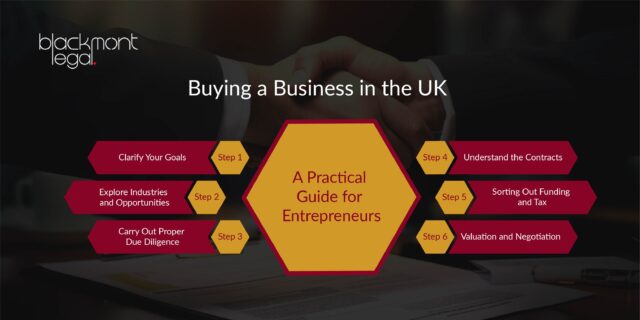
Step 5: Sorting Out Funding and Tax
Financing can come from personal funds, banks, private investors, or government-backed schemes. The Enterprise Investment Scheme (EIS) and Seed Enterprise Investment Scheme (SEIS) are strong options for investors, offering significant tax reliefs for qualifying businesses. You should structure these deals to maximise tax advantages while keeping you compliant with HMRC requirements.
Key Tax Relief Options for Investors
| Scheme | Relief Offered | Maximum Investment | Holding Period |
| SEIS | 50% income tax relief, CGT exemption, loss relief | £100,000 per year | 3 years |
| EIS | 30% income tax relief, CGT deferral, loss relief | £1,000,000 per year | 3 years |
Step 6: Valuation and Negotiation
Getting the valuation right matters. Overpay, and the deal becomes a burden. Underpay, and you risk losing the seller’s trust or the opportunity itself. Valuations weigh assets, liabilities, customer base, contracts, and future growth. Blackmont Legal works alongside financial advisors to ensure valuations are fair and negotiations are watertight from a legal perspective.
Common Buyer Mistakes
Even experienced buyers slip up. Typical errors include:
• Ignoring full due diligence
• Underestimating integration or transition costs
• Paying too much due to poor valuation
• Overlooking employee liabilities
• Failing to prepare for post-purchase operations
Legal guidance can prevent these missteps, protecting your money, your time, and your reputation.
Why Legal Support Matters
Buying a business is not just about the paperwork. It is about ensuring your investment stands on solid ground. It is important to manage the legal and commercial strategy behind every transaction – drafting, negotiating, resolving disputes, and closing deals smoothly. Our expertise gives you confidence that the process is secure and the outcome is in your favour.
The UK Small Business Landscape in Numbers
According to the Department for Business, Energy & Industrial Strategy, there were 5.5 million small businesses in the UK at the start of 2023 – over 99% of all registered companies. SMEs employ 16.7 million people, representing 61% of the private sector workforce. Each year, more than 40,000 business acquisitions and disposals take place across the UK. These figures prove how active the market is – and why legal support is essential to navigate it safely.
What Happens After the Purchase
Closing the deal is not the end – it is the start of integration. You will need to align operations, lead staff, and secure long-term stability. Strong legal structures, from employment terms to shareholder protections, underpin that success.
Making the Right Move
Buying a business in the UK can be a smart move when done right. Define your goals, research the market, run solid due diligence, and structure the deal properly. The right legal advice makes that possible.