A cease and desist letter is often the first formal step in a legal dispute. It is not a court order. It does not compel anyone to do anything. But it signals that the sender believes their legal rights are being infringed and that they are prepared to take the matter further if the conduct does not stop. Whether you are sending one or have just received one, understanding what the letter does and does not do is the starting point.
What Is a Cease and Desist Letter
A cease and desist letter is a formal written demand asking another party to stop a specified activity and to refrain from repeating it. It identifies the conduct the sender considers unlawful, sets out the legal basis for the complaint, and states the consequences of non-compliance.
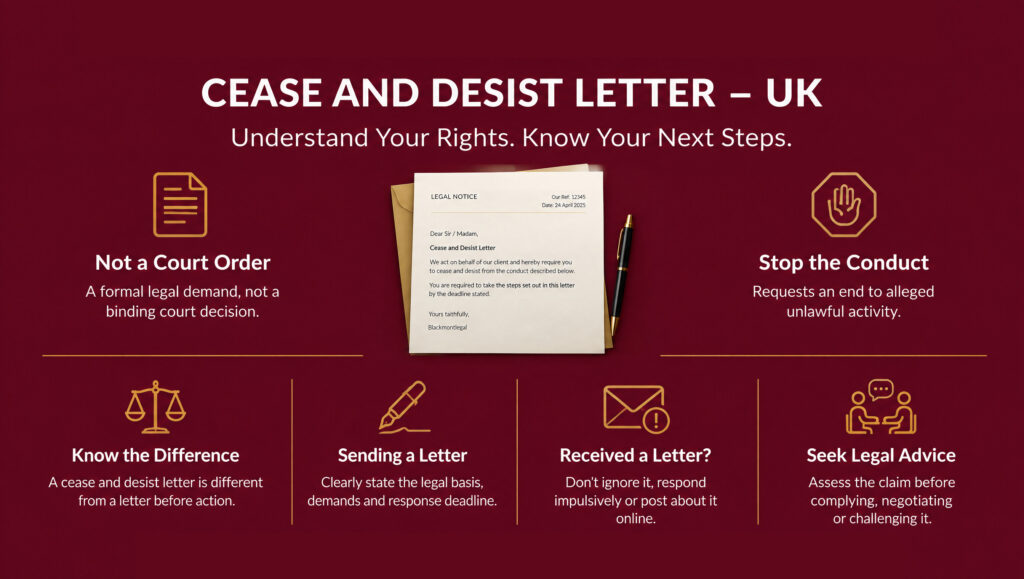
In England and Wales, the letter carries no legal force on its own. It is not binding. It is not an injunction. It cannot be enforced by a court. What it does is create a formal record that the sender put the recipient on notice, which becomes relevant if the matter proceeds to litigation. A party who continued the conduct after being warned is in a weaker position than one who was never told there was a problem.
Cease and Desist Letter vs Letter Before Action
These are related but distinct. A cease and desist letter focuses on stopping conduct. A letter before action, governed by the Pre-Action Protocols under the Civil Procedure Rules, is a formal step required before issuing court proceedings.
A cease and desist letter can satisfy the requirements of a letter before action if it contains the right information: the legal basis for the claim, the conduct complained of, the remedy sought, and a reasonable deadline for response. Many solicitors draft cease and desist letters with the Pre-Action Protocol requirements in mind so the letter serves both purposes. If proceedings become necessary, the court will look at whether the protocol was followed. A letter that meets the requirements from the outset avoids having to send a second one.
If You Are Sending One
When It Is the Right Move
A cease and desist letter is appropriate where someone is infringing your intellectual property, publishing defamatory content about you or your business, breaching a contractual obligation, or engaging in harassment. It works best where the objective is to stop the conduct quickly without the cost and time of litigation.
It is not always the right move. If the matter is urgent and there is a risk of irreparable harm before the recipient has time to respond, an application for an interim injunction may be more appropriate than a letter. If the legal basis is weak, sending a letter can invite a counterclaim or a complaint for groundless threats, particularly in trade mark and patent disputes where the Intellectual Property (Unjustified Threats) Act 2017 restricts what can be said in a warning letter.
What to Include
The letter must identify the sender and their legal standing. It must describe the specific conduct that is complained of with enough detail that the recipient knows exactly what they are being asked to stop. It must set out the legal basis for the complaint, whether that is copyright infringement, trade mark infringement, defamation, breach of contract, or another cause of action.
It must state what the sender wants: stop the conduct, remove the offending material, provide undertakings not to repeat it, and in some cases deliver up or destroy infringing goods. It must set a reasonable deadline for response. And it must state what will happen if the recipient does not comply, typically that the sender will issue court proceedings without further notice.
Solicitor vs DIY
You can write and send a cease and desist letter yourself. There is no legal requirement for a solicitor to be involved. But a letter on solicitor’s headed paper carries significantly more weight than one from the complainant directly. Recipients take solicitor letters more seriously because they signal that the sender has already taken legal advice and is prepared to follow through.
A solicitor also ensures the letter is legally sound. A badly drafted letter that overstates the legal position, makes threats the sender cannot back up, or falls foul of the unjustified threats provisions can do more harm than good. It can also undermine your credibility if the matter reaches court.
If You Have Received One
What It Means
It means someone believes you are infringing their legal rights and wants you to stop. It does not mean they are right. It does not mean you are being sued. It does not mean you have to do what the letter says. But it does mean the sender is on record as having put you on notice, and ignoring it without taking advice is risky.
The letter will typically demand that you stop the specified conduct, provide written undertakings not to repeat it, and in some cases pay compensation or hand over materials. It will set a deadline. Missing that deadline without responding, even if you dispute the claim, puts you in a weaker position if the matter escalates.
What to Do
Read the letter carefully. Identify the specific conduct complained of and the legal basis cited. Do not respond immediately. Do not ignore it. Do not post about it on social media.
Take legal advice before you respond. A solicitor will assess whether the claim has merit, whether the demands are proportionate, and what your options are. Those options include complying with the demands, negotiating a compromise, challenging the claim on its merits, or in some cases making a counterclaim. The right response depends entirely on the strength of the sender’s position and yours.
If the letter raises allegations of trade mark or patent infringement and you believe the threats are unjustified, you may have a claim under the Intellectual Property (Unjustified Threats) Act 2017. That Act gives recipients a cause of action against senders who make groundless threats of infringement proceedings in certain circumstances.
Frequently Asked Questions
What is a cease and desist letter?
A formal written demand asking another party to stop a specified activity and refrain from repeating it. It is not a court order and is not legally binding on its own.
Is a cease and desist letter legally binding in the UK?
No. It is a demand, not an order. Only a court can issue a binding order such as an injunction. But the letter creates a formal record of notice that is relevant if the matter proceeds to litigation.
What is the difference between a cease and desist letter and a cease and desist order?
A letter is sent by a person, business, or solicitor. An order is issued by a court, typically in the form of an injunction, and is legally enforceable. Breach of an order can result in contempt of court.
Do I need a solicitor to send a cease and desist letter?
No, but a letter on solicitor’s headed paper carries more weight and ensures the legal basis is properly stated. A poorly drafted letter can undermine your position or expose you to a counterclaim for unjustified threats.
What should I do if I receive a cease and desist letter?
Do not ignore it and do not respond immediately. Take legal advice. A solicitor will assess whether the claim has merit and advise on the best response, which may include complying, negotiating, or challenging the claim.
Can a cease and desist letter backfire?
Yes. If the legal basis is weak, the threats are disproportionate, or the letter falls foul of the Intellectual Property (Unjustified Threats) Act 2017, the recipient may have a counterclaim against the sender.
How much does a solicitor’s cease and desist letter cost?
Costs vary depending on the complexity of the matter, but a straightforward letter is significantly cheaper than issuing court proceedings. Contact us for a quote based on your specific situation.